Work, Employment and Enterprise in Technology
Agricultural Technology
Work, employment and enterprise is embedded in the content and provides opportunities for students to:
- develop agricultural skills associated with the establishment and maintenance of safe and healthy work environments
- explore opportunities for the innovative and creative application of technologies in agriculture-based vocations
- develop educational skills that build opportunities for education and training for employment in the future and the contributions of different groups to work in the rural workplace
- examine the nature and practice of work in agricultural fields
- build an appreciation of the opportunities that exist in agricultural careers.
Design and Technology
The processes of design, innovation and enterprise are embedded in the outcomes and content, promoting development of desirable employment skills. Knowledge and understanding are developed through research, analysis and evaluation of the work practices of designers. Themes include the work of past and current designers from a range of focus areas, workplace legislation and the changing nature of work. Employment and enterprise skills are developed through self-evaluation, individual and team projects and practical activities.
Food Technology
Students will develop an understanding of work and employment through the study of workplace practices within the Australian food industry. Students will explore work-related concepts in the core ‘food preparation and processing’ and in the focus area ‘food service and catering’. Students will develop an understanding of current work practices including Occupational Health and Safety (OHS) requirements, safe work practices, industrial legislation, industrial awards and enterprise agreements and the Anti-Discrimination Act. Knowledge and skills gained through food handling in all practical classroom activities are transferable to personal and vocational contexts.
Graphics Technology
In all core and option modules students apply appropriate industry standards and follow correct work practices. They gain an understanding of the scope and nature of the graphics industry, and the range of options allows students to develop knowledge about and skills in specific areas of the industry. Technical literacy and numeracy are integral to the study of the course, helping to prepare students for their place in the workforce. Problem-solving, workplace communication, collaborative work practices and Occupational Health and Safety are embedded in all modules and options.
Industrial Technology
In all aspects of the course, students will use and apply appropriate industry terminology and work practices. Students develop an awareness of the range of vocational opportunities available through a materials-based focal study. Problem-solving, workplace communication, cooperative work practices and Occupational Health and Safety are embedded in all focus areas.
Information and Software Technology
In all aspects of the course students study appropriate industry standards and work practices. Students gain an understanding of specific career opportunities related to information and software technology. Technical literacy is integral to the study of the course, preparing students with an understanding of and skills in the use of software and hardware devices. Problem-solving, workplace communication, collaborative work practices, occupational health and safety issues are embedded in the syllabus.
Marine and Aquaculture Technology
In all aspects of the course students will use appropriate industry terminology and work practices. They learn to identify and describe a range of marine and maritime vocations and volunteer organisations. Students develop an awareness of the range of vocational opportunities available through the study of focus areas. Optional study of the Marine Employment focus area can also be undertaken.
Problem-solving, workplace communication, cooperative work practices and Occupational Health and Safety are embedded in the syllabus.
Technology
The use of processes to design, produce and evaluate give students the opportunity to develop skills highly sought after in the workplace. In Technology (Mandatory) students develop initiative, an ability to work in groups, an appreciation of quality and the ability to manage with flexibility. They develop technological literacy and are encouraged to become independent thinkers and confident communicators. Students study careers in a range of fields of technology and design. They study the cooperation, gender and leisure issues related to work and employment.
Textiles Technology
Students are given opportunities to examine various sectors in the textiles industry, developing knowledge and understanding of the workplace practices, issues, legislation and the changing nature of work within this industry. This content includes specific knowledge and understanding of current employment opportunities. Employment and enterprise skills are developed throughout the course through self-evaluation, projects and practical application of knowledge.
(NSW Board of Studies Technology Years 7-10 Syllabuses)
The School to Work Program
Initiatives in Technology with a focus on Work, Employment and Enterprise also support the outcomes of The School to Work Program. A major focus of this program is to integrate vocational learning into classroom practice. This encompasses the development of employment related skills and exposes students to a range of workplace contexts related to their class work. Class topics can be linked to relevant career pathways so that students can make the connections between their learning and the ‘real world’. This may occur in the form of simulated workplace activities, engaging in workplace problem solving tasks, or incorporate workplace research. Schools can provide all students from Years 9-12 with an Employment Related Skills Logbook which enables them to identify and record the skills learned in their school, community and workplace contexts.
For further information on School to Work, click on the link below.

Vocational Learning in Technology
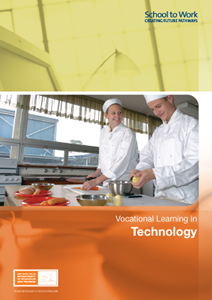
This resource booklet was developed in 2005 by the Vocational Education in Schools Directorate in consultation with Curriculum K-12. Vocational Learning in Technology provides teachers with practical activities to integrate Work, Employment and Enterprise into teaching and learning. The Vocational Learning in Technology resource booklet is available on the Vocational Learning website.
Vocational Learning Resources for Technology
Australian designers at work
Australian designers at work Meet designers and learn about how they work: Designer profiles developed by the Technology Unit, Curriculum K-12 Directorate and supported by the Vocational Education in Schools Directorate of the Department of Education and training in partnership with the Powerhouse Museum.
School to Work
The School to Work Program is a NSW DET initiative to improve the preparation of school leavers moving into the workforce and/or further training. A range of teaching ideas has been developed to support teachers in the implementation of vocational learning in Stage 5 technology syllabuses:
Agricultural Technology
Design and Technology
Food Technology
Graphics Technology
Industrial Technology
Information and Software Technology
Textiles Technology
Workplace Learning Policy for Secondary Students in Government Schools and TAFE NSW Institutes

© State of New South Wales through the Department of Education and Communities, 1999 - 2011. All rights reserved.